When does real product photography matter and when AI is an option? If you have recently looked at Linkedin posts and ads by freshly founded AI studios and creators, you might think Artificial Intelligence has completely revolutionised the way we create marketing materials and images. While partially true to an extent, there are a few major downsides, real legal issues, new EU legislation and mandatory labelling of AI images they're not telling you, to take in account.

Photography That Shows the Real Product
Customers buy the actual product that arrives in the box.
Professional product photography captures the real colour, texture, materials, finish and proportions of a product. Whether it's polished metal, textured leather, frosted glass or premium packaging, studio lighting is carefully controlled to present every detail accurately.
The consistency becomes especially important across ecommerce websites, catalogues, printed brochures, Amazon listings and retail packaging.
A customer should receive exactly what they expected after seeing your product images. How much time in your life have you spent on examining product images online trying to assess if that's a good fit for you, or if the product is actually made of the material it says it is?
Neither side wants to deal with returns.
A Professional Studio Offers More Than a Camera
In studio every image is captured with complete control over lighting, reflections, shadows and colour accuracy. Products are cleaned, carefully positioned and photographed to highlight their design and craftsmanship. Techniques like focus stacking or tilt-shift lenses make sure the product is in focus throughout the image. These images can handle very close-up scrutiny in full resolution.
Professional retouching removes dust, fingerprints and minor imperfections without changing the product itself.
The result is an image that feels tangible and premium because it is based on reality. Like you could almost pick it up off the image.

Where AI Generated Product Images Can Create Problems
The biggest limitation of AI is that it doesn't photograph reality. It predicts it. It's different than photoshopping a soda can into a new background, as every time AI generates – Well it literally generates a new image. It is no longer the reference image you uploaded, but a new generated version with all new pixels.
Generated images may introduce incorrect textures, unrealistic reflections, impossible construction details or subtle changes to a product's appearance. What AI often gets wrong is lighting, as it doesn't function like a 3D model which actually is modeled based on the real world physics. This is part of the "uncanny valley" effect. You know something is wrong but can't quite put your finger on it.
While these differences may seem small, they can create problems for:
- ecommerce stores
- luxury brands
- regulated industries
- technical products
- products where colour accuracy is essential
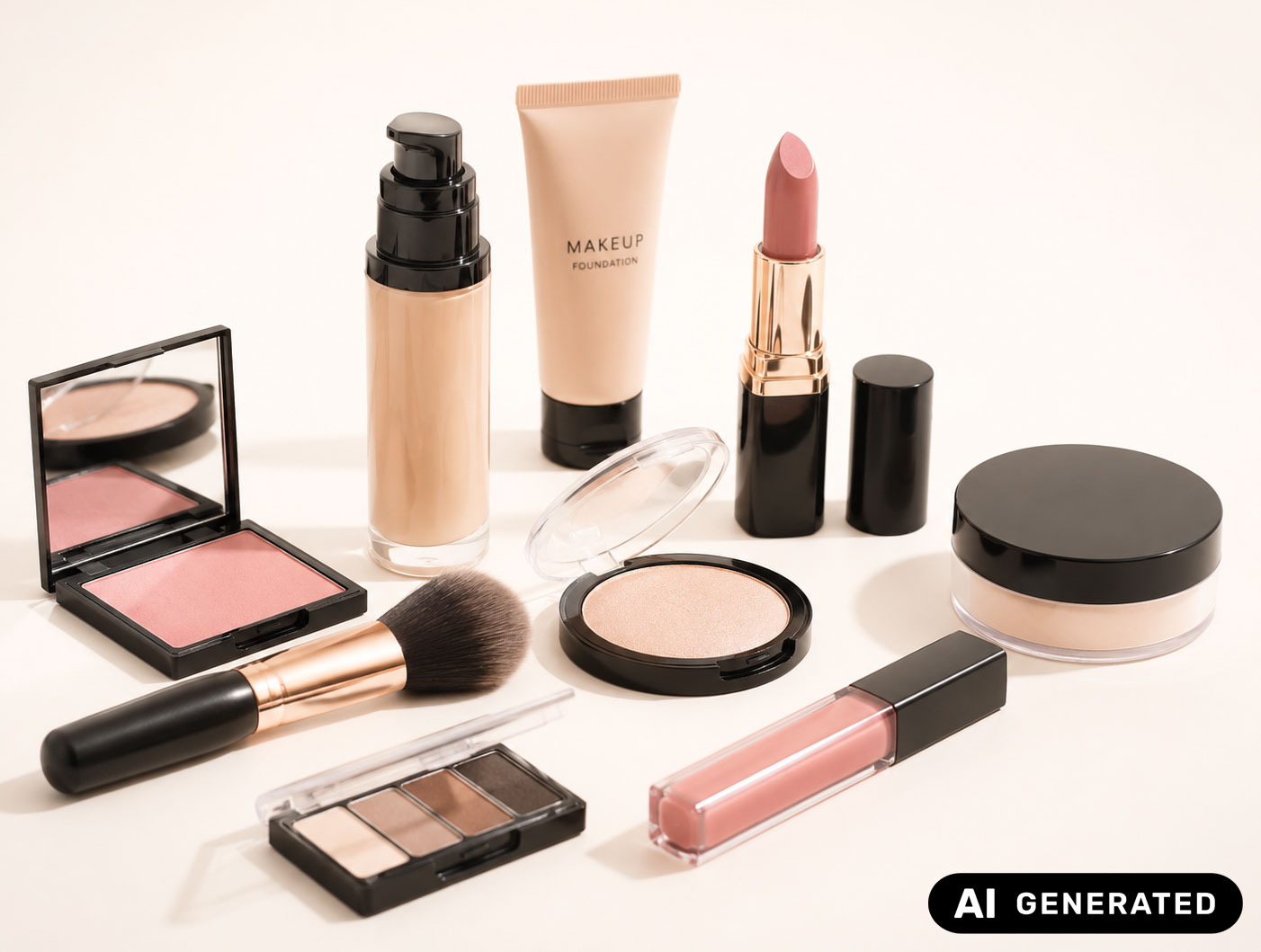
EU AI Labels, Transparency and Consumer Trust
In the European Union economic area, starting from August 2nd, 2026 AI generated content will need to be visibly labelled as such or risk penalties up to €15 million or 3% of a company's total worldwide annual turnover. That means having a visual tag over a generated or AI manipulated image saying "AI Generated" or "AI Enhanced". New York already applied similar rules in June 9, with rest of the US expected to follow sooner or later.
It goes without saying such labels or content tags over product images can eradicate customer trust instantly. As a consumer you have no idea how this product actually looks like. Or if it even exists. Or if the company exists... Or is this a scam website phishing for my credit card information? Even when a tag is not applied, the AI generated image carries metadata which allows social platforms to add an AI or content icon over it. Currently on Linkedin you can see a "Cr" icon over AI images that open up the info on how it was generated.
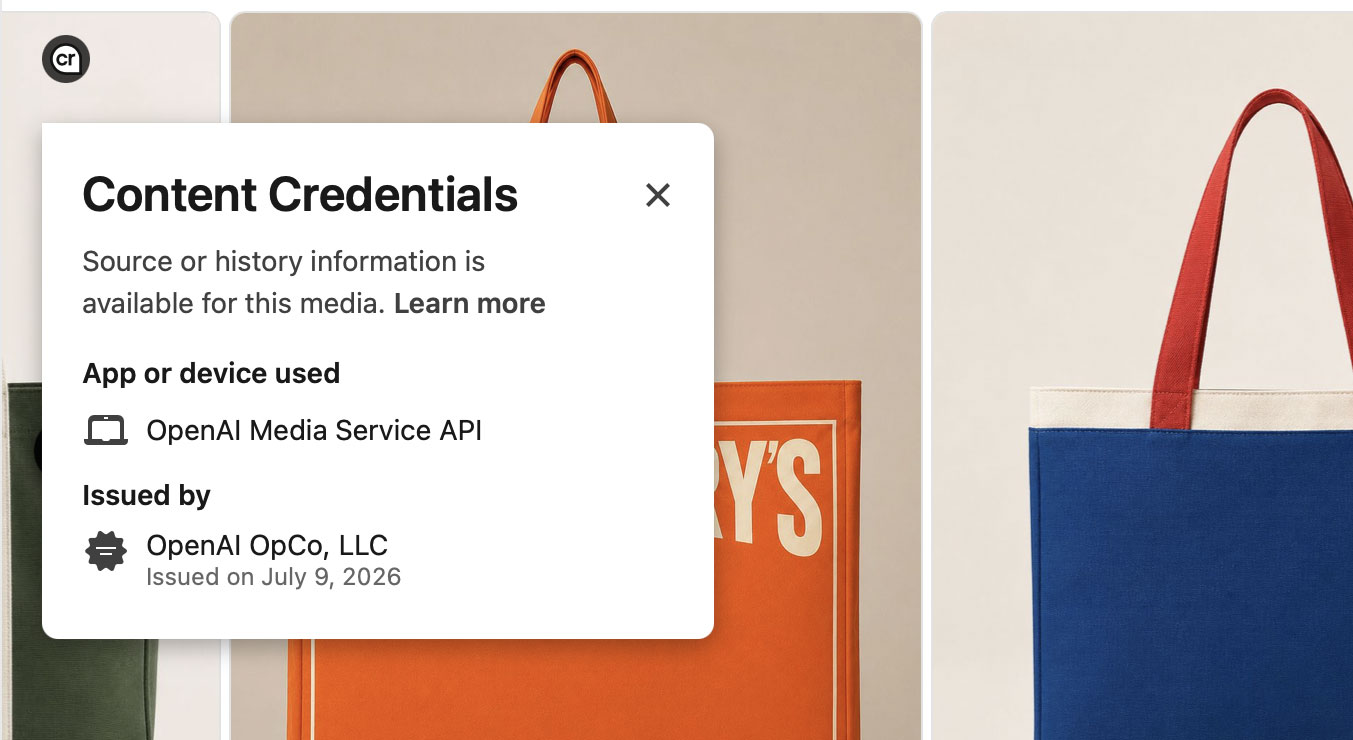
A quick glance in the social media comment sections where brands have used AI generated images or even replaced human models, shows how quickly brand image and trust can be lost. AI labels can send a strong message, one that you didn't want to send.
For a new brand starting out with small budget, AI images can understandably be a very enticing option. However it can turn costly to not comply with the new EU rules. If labeling your images and videos as AI isn't a problem then it's of course up to you. In fact, what you pay in AI subscriptions and generative token credits can easily surpass a product photography shoot.
Copyright of the Reference Image & The Lack of AI's
It's easy to pick an image you like from Pinterest and upload to ChatGPT, Claude or any number of AI image generators as a reference to create your images. What you likely didn't notice is the part in the AI company's terms of services that says you need to own the copyright or have a license to upload the reference image for commercial generative purposes.
Copyright protects many aspects of a photograph, creative choices like the lighting, composition, angle, exposure, focus and so on. Recently a Philippa K campaign used another photographer's image as a reference and the AI spat out almost an exact replica, just with a different face. That's where the problems start and people notice. The campaign was cancelled. AI services dump responsibility on the user.
Own Your Brand Assets
On the flip side, the image you just generated may carry no copyright at all. Anyone can take and use fully AI generated images. When that is your brand assets that's not a great thing.
When to Use AI Images?
AI can be a wonderful help in creating moodboards and initial ideas for a photoshoot. It's a handy tool for the client to communicate what they have in mind for the final image, instead of hand drawing sketches.
Personally I don't use AI imagery or generated enhancement in any final output. Without going into ethics and environmental impact, the risk of potential legal repercussions alone are just way too big.
How to Get My Products Photographed in Dublin?
I'd love to deliver real product photos captured in studio for your brand or product. To get a tailored quote send me a message through the contact page.